Cross with Grapes and Wheat: A Craft Fair Embroidery Review
First Impression of Cross with Grapes and Wheat
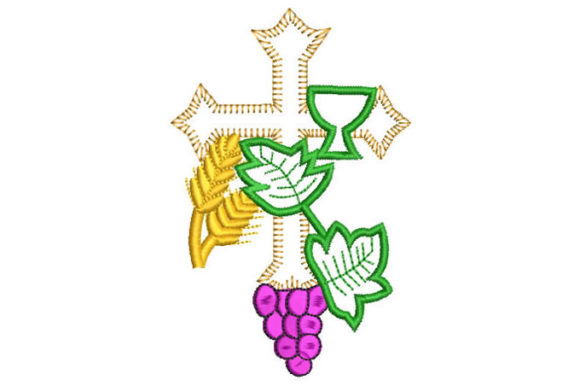
When I opened the file for Cross with Grapes and Wheat, the immediate feel was elegant and reverent. The combination of the cross with grape clusters and wheat sheaves reads instantly as a Communion or harvest motif. It is not a casual design. It carries a quiet, dignified weight that will draw a specific audience at a craft fair. From across a booth, the silhouette holds together well. The wheat stalks soften the vertical line of the cross, while the grapes add a gentle, rounded contrast. This is not a minimalist modern piece, and it is not playful. It sits squarely in a traditional, decorative religious space that many handmade shop owners know sells consistently.
In terms of market mood, Cross with Grapes and Wheat feels premium without being ornate. It would not look out of place on a delicate linen altar cloth, but it is sturdy enough to work on a heavy kitchen towel. The description mentions "beautiful accent to church decor, church outfits, and many other fabrics," and that framing is accurate. If you embroider this on a simple tote bag in a soft wheat thread on natural cotton, the result whispers handmade quality rather than shouting. That soft-spoken confidence can be a strong selling point in a busy craft fair aisle, where sometimes the quieter, meaningful designs catch the eye of the right buyer.
Evaluating Cross with Grapes and Wheat for Real-World Craft Fair Products
In my studio, I always judge a new machine embroidery design by how many different products it can genuinely elevate. A design that forces you into only one small category limits your booth and your selling day. Cross with Grapes and Wheat passed my mental walkthrough across several surfaces.
Where It Shines the Brightest
- Tea towels and kitchen linens — This is the bread and butter of religious craft fair products. A crisp white flour sack towel with this design stitched in a warm gold or deep burgundy thread becomes an instant giftable item. The wheat and grapes theme ties into kitchen and harvest symbolism beautifully.
- Pillow covers — A simple 18x18 inch cover in linen or a soft cotton blend with Cross with Grapes and Wheat centered gives a farmhouse-church vibe that works well for home decor buyers.
- Altar cloths and church decor fabrics — The design’s scale and subject matter are essentially made for this. On a white or ivory polyester satin, the embroidery looks elevated and intentional.
- Aprons — A full-length apron with this design placed high on the bib creates a unique piece for church kitchen volunteers or holiday baking-themed markets. The design’s verticality suits the apron panel perfectly.
- Tote bags — A natural canvas tote with the design in a tone-on-tone thread (cream on beige) or a muted olive becomes a subtle statement bag. These sell well as handmade products priced between $18 and $28 at a fair.
- Fabric pouches and small zipper bags — Use the design as a focal point on a larger wristlet or a Bible cover pouch. It adds perceived value and a bespoke feel.
Products That Need More Testing
Caps and curved surfaces demand extra caution. The cross and wheat elements involve vertical lines and small grape berries that can distort on a cap’s compound curve. I would only attempt this on a structured cap with a low-profile seam and reinforce the placement with a strong stabilizer. For patches, the design would work well if stitched on a stable twill or felt with a dense satin edge. However, the fine wheat strands could lose definition at patch sizes below 3 inches, so I would not shrink this into a tiny jacket patch without first stitching a sample.
On market bags made of loosely woven jute or thin cotton, the stitch density might pull and create tunneling. I would only use a heavy cutaway stabilizer and even then, test on a scrap. The design needs a smooth, stable fabric to read clearly.
Practical Production Notes for Sellers and Booth Prep
Before you stitch out a dozen of these for your weekend craft fair, here are the behind-the-scenes checks that matter.
Stitch Density and Small Details
Grape clusters almost always mean a significant number of small, tightly packed fills. With Cross with Grapes and Wheat, pay close attention to the grape areas. If the stitch density is too high, you risk the design becoming stiff and puckering the fabric. The wheat ears also include tiny, detailed lines. Those fine lines can disappear on textured fabrics like terry cloth towels. I always run a test stitch on the actual fabric I plan to sell. Do not assume a smooth stitch-out on quilting cotton will look the same on a thick, absorbent tea towel. If the wheat details close up, you may need to slow the machine speed or use a finer needle.
Thread Color and Fabric Contrast
This design relies on contrast to let the grapes and wheat stand out against the cross. On dark fabric, like a navy tote, you will need to choose thread colors carefully. A metallic gold or a light ecru can make the design pop, but a muted brown may vanish. On white or cream fabric, a rich burgundy for the grapes, a warm wheat tone, and a wooden-hued cross create a classic look. I often stitch one sample on a dark background and one on a light background to show customers options. That single decision can double engagement at a booth table.
Sizing and Hoop Considerations
The product description does not list a specific hoop size, so you must check the embroidery file details before purchasing. Ask the digitizer for recommended dimensions. I would aim for a maximum width of around 4.5 to 5 inches for a tote or pillow front. For smaller items like a pouch or patch, a 3-inch-wide version may work, but only if the grape berries and wheat strands do not close up. If the design comes with multiple sizes, test the smallest one first with a high-contrast thread to see where details break down. Cross with Grapes and Wheat is best appreciated at a scale where the grapes read as clusters and the wheat as individual heads, not a single blur.
Stabilizer Choices by Product
- Tea towels and flour sack fabric — Use a medium-weight cutaway stabilizer and consider adding a water-soluble topping to prevent the stitches from sinking into the weave.
- Canvas tote bags — A firm cutaway stabilizer is essential. The weight of the bag can pull at the design, and a tear-away will not give enough long-term support.
- Linen pillow covers — Linen shifts easily. Use a temporary adhesive spray with a strong cutaway stabilizer, and baste the fabric in the hoop if possible.
- Aprons and clothing fabrics — If the fabric has any stretch, do not skip a fusible mesh stabilizer. The cross design is symmetrical, and any distortion will be glaring.
How Cross with Grapes and Wheat Draws Customers at a Booth
Imagine walking through a craft fair. Tables blur together with bright colors and loud signs. Then you see a display of creamy linen pillows and folded tea towels, each featuring Cross with Grapes and Wheat in soft harvest tones. The design invites closer inspection. Buyers who stop often touch the embroidery, and if the stitches feel smooth and substantial, they equate that with quality. This design’s subject matter also triggers a personal connection. A customer might say, "This reminds me of my grandmother’s church," or "I need a gift for a first communion." That emotional bridge is what turns a browser into a buyer.
For Etsy sellers and those who list online, this design photographs wonderfully on a flat surface. The vertical symmetry makes it easy to center, and the smooth contours give appealing texture in close-up shots. A well-lit photo of the stitched design on a linen pillow, with a sprig of dried wheat and a few grapes styled nearby, creates a printable mockup that tells the story before anyone reads a word. That kind of styling is invaluable for digital embroidery file previews and finished product listings.
Batch Production and Repeat Selling Potential
From a production standpoint, Cross with Grapes and Wheat stitches out with a steady rhythm once you have your settings locked. The grape areas may take more time due to dense fill, but overall the design is not excessively large. I estimated that on a single-needle machine, I could produce about four tea towels per hour after hooping and setup. That makes it feasible to build inventory for a weekend show without feeling frantic. Because the design works year-round—covering communion seasons, fall harvest markets, and general church decor—you are not stuck with a seasonal-only product. That matters when you are planning a small shop product line that needs to sell across multiple shows.
Designer Notes and Final Checks Before Selling
Every commercial embroidery project starts with a test stitch. With this design, I recommend the following checklist before you finalize any product:
- Stitch a sample on the exact fabric and stabilizer combo you intend to sell.
- Check thread tension on the grape clusters. Too loose and the underlay shows; too tight and the fabric puckers.
- Review the design at actual selling size. Step back five feet and see if the wheat and grapes remain distinct. If they muddle, adjust size or thread contrast.
- Create one real mockup to photograph. This will also reveal any flaws in hooping or alignment.
- Confirm the embroidery file’s commercial licensing before selling finished products. The product description cuts off, so do not assume. Reach out to the digitizer if the terms are unclear. As a rule, I never purchase a digital embroidery file for business use unless I have explicit permission to sell the physical finished product.
- Compare fabric colors against your booth palette. You want the thread choices to feel cohesive with the rest of your collection, not isolated.
Cross with Grapes and Wheat is not a design that will fly off the table to a teenager buying trendy patches. It is a steady, mature seller that attracts buyers looking for meaningful, quality work. If you present it on practical, well-finished items—tea towels, pillow covers, altar linens, or quality totes—you build a reputation for tasteful religious gifts. That reputation is what brings customers back at the next fair, and that is where the real income lies.
My final word: this machine embroidery design deserves a prominent spot in a booth where it can be seen up close and touched. Do not bury it behind louder, flashier pieces. Let its quiet story do the selling, and your craft fair table will feel both polished and purposeful.